Dante Quartet is an experimental film made by Stan Brakhage in 1987. It uses the technique of hand-painted film to represent the afterlife through colour and shape. It famously took Brakhage over six years to complete, as he painted each frame in the six-minute piece himself.
Hand-painting film is a very interesting technique, as it forces the artist to discard traditional image in favour of colour, shape, tone, speed, light and other formal elements. This provides a challenging but potentially rewarding method of communicating moods, feelings and ideas. For example, during the Hell Itself section of Dante Quartet, Brakhage uses harsh, dark colours to represent evil, pain and suffering. However, during the Purgatory segment of the film, he uses brighter colours like blue, yellow and green, which are connotative of nature and thus feel more positive.
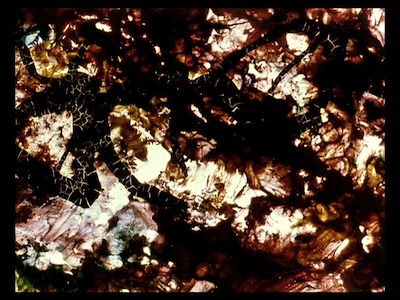

A comparison of the difference in tone, colour and shape in Dante Quartet
I am inspired by the way this film does not rely on solid image to convey meaning or feeling. I feel that the abstract approach it has taken is inspiring for its bravery and ambition, as well as its successful execution, as audiences feel the moods he is attempting to convey. I am also inspired by the segmented nature of the piece, and how the feelings and imagery changes with each section.
The inspiration drawn from this piece is very relevant to my own project, as both Brakhage and myself have been inspired by Dante Alighieri's Divine Comedy, however I have chosen to focus on one section of the poem and represent the various environments within Inferno. As my soundtrack is so literal and detailed, the idea of having a more abstract approach to my experimental film is very appealing. However, I feel that the piece may be a little too abstract at points, so I am interested in finding a happy medium between the abstract and the literal, perhaps in the style of Ballet Mécanique. I am still confident that I want to take a structuralist approach to the film, but I am now interested in incorporating abstract or Dadaist elements.

No comments:
Post a Comment